






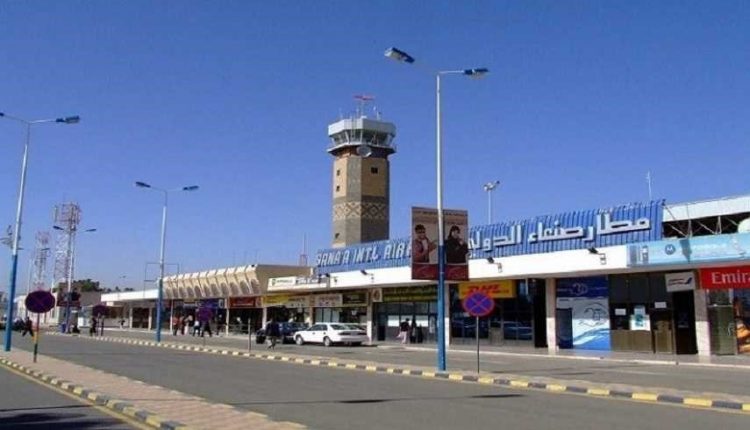
Khaled Al-Shaif, Director of Sana’a International Airport, described the continued air blockade on the airport as a humanitarian and legal crime against the Yemeni people, asserting that it is being used by the coalition of aggression, led by Saudi Arabia, as a tool of political pressure and collective punishment.
He emphasized that the airport is fully operational and technically ready, and that no international resolution or legal justification exists to prevent its full reopening to civilian flights.
Al-Shaif highlighted that an agreement reached in April 2022 stipulated the opening of flights from Sana’a to both Jordan and Cairo. However, the repeated delays in launching the Cairo route reflect the coalition’s lack of seriousness in implementing agreements and its imposition of arbitrary restrictions that violate international law and civil aviation conventions, which guarantee people’s right to travel.
He explained that Sana’a Airport has been closed by a direct decision of the coalition of aggression since August 2016. Since then, Yemenis have endured a deliberate policy of “slow death,” depriving patients, students, and humanitarian cases of their right to travel and seek treatment.
He described limited openings prior to the full suspension as unlawful constraints that perpetuate the siege rather than lift it.
According to Al-Shaif, the air blockade remains in effect, preventing any flights—including medical evacuations—without prior approval from the coalition, which is controlled directly from Saudi Arabia.
Before the conflict, he said, the airport handled nearly 5,000 passengers daily, serving about 80 percent of Yemeni travelers across fifteen governorates. Its closure has denied travel to approximately 4 million citizens annually.
He noted that the blockade has exacerbated Yemen’s humanitarian crisis, with rising numbers of illnesses caused by the use of internationally banned weapons, including cancer, kidney failure, and disabilities.
More than 1.5 million patients have died over the years due to the inability to travel for treatment, and nearly 500,000 patients, including 50,000 cancer patients and 20,000 with kidney failure, remain in urgent need of medical travel abroad. Al-Shaif also highlighted that thousands of essential medicines cannot enter Yemen because of the blockade, leading to the death of around 15 patients daily.
He emphasized that the airport is fully capable of operating flights immediately if the ban is lifted, but the true purpose of the closure is to pressure the Yemeni people and punish them for their principled stances, including rejecting foreign tutelage, opposing normalization, and supporting the Palestinian cause.
Al-Shaif accused the coalition of trying to stir internal resentment and pressure Yemen’s leadership by coercing airlines and applying illegal measures to prevent flight operations.
He further stated that no Yemeni airport operates freely, with airports in liberated areas besieged and some destroyed, while airports in occupied provinces are directly controlled by the coalition, leaving no authority for local forces to operate flights without Saudi approval.
He concluded that the full responsibility for the continued closure and its resulting casualties rests with the coalition of aggression, particularly Saudi Arabia. The ban leads to at least fifteen patient deaths daily, with emergency cases unable to travel safely by land, facing arrests, violations, and attacks from armed militias.
Al-Shaif reaffirmed that Sana’a Airport is technically and administratively ready to resume operations immediately once the unjust air blockade is lifted.