







Hadhramaut Governor Luqman Baras affirmed that the glorious November 30 anniversary remains a defining symbol of the free Yemeni will—an occasion that broke the chains of colonialism and secured the Yemeni people’s right to freedom and independence.
The governor stated that the commemoration of November 30 will continue to serve as a guiding beacon for Yemenis, inspiring them toward greater dignity, pride, and the pursuit of full independence from what he described as “new occupiers” in the currently occupied territories.
Baras highlighted the profound significance of this national occasion in Yemen’s modern history, reflecting the heroic sacrifices of martyrs and freedom fighters who confronted British colonial rule, which gripped the south for nearly 129 years.
He pointed to growing public anger and unrest in Hadhramaut and other southern and eastern provinces, attributing it to the “criminal and reckless practices” of Saudi and Emirati forces and their local proxies.
The governor outlined the ongoing conspiracies targeting Yemen in general, and the occupied provinces in particular, by the United States, the Israeli enemy, Saudi Arabia, and the UAE. He said these parties are seeking to destabilize Hadhramaut by fueling internal conflicts as part of broader plans aimed at undermining the province’s cohesion, security, and stability.
Baras added that the current unrest in Hadhramaut—driven by Saudi and Emirati policies and backed by British and American involvement—represents yet another manifestation of foreign occupation. However, he stressed that such actions only strengthen the resolve of Hadhramaut’s people, and of southerners overall, to resist occupation in all its forms, drawing on their long history of anti-colonial struggle.
The governor emphasized that the people of the southern and eastern provinces must remember their historic resistance against British rule and the heavy sacrifices made by earlier generations. He said the situation today mirrors that past struggle, amid the Saudi-Emirati occupation supported by the United States and the Israeli enemy—calling for unified Yemeni action to expel “the new occupiers.”
Baras praised the Yemeni people—north, south, east, and west—for their heroic struggle that forced the British to withdraw from southern Yemen on November 30, 1967. He urged all Yemenis to draw strength from that legacy as they work to liberate the remaining occupied territories.
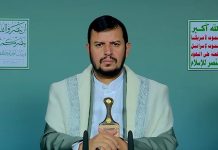
In conclusion, the Hadhramaut governor expressed appreciation for the support of Revolution Leader Sayyid Abdul-Malik Badr al-Din al-Houthi, noting his continued attention to the southern and eastern provinces and his repeated calls for unity and collective action to liberate them from Saudi and Emirati occupation.