









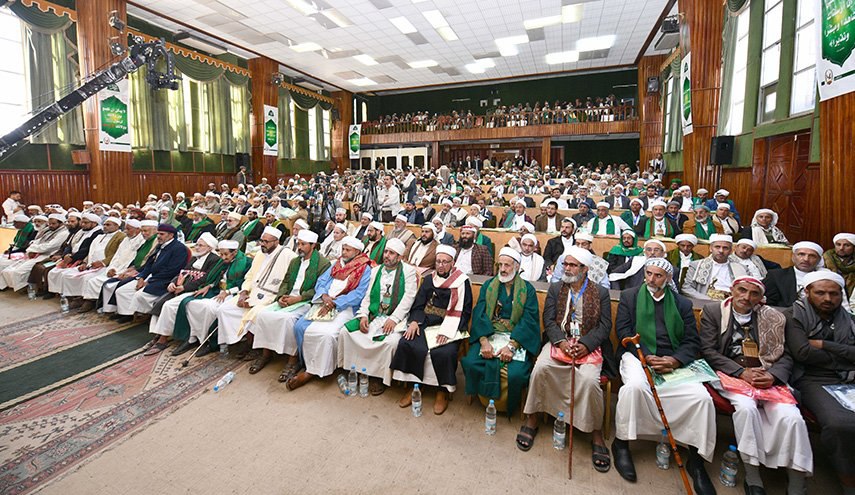
The Yemeni Scholars Association, based in Sana’a, held a major conference on Saturday titled “The Responsibility of Scholars in Championing the Book of God and Sacred Sites, and Mobilizing the Nation for Jihad against America and Israel.”
The gathering, attended by senior religious and political figures, served as a platform to strongly condemn perceived insults against Islam’s holy scriptures emanating from the United States, and to frame Yemen’s conflict as a defensive religious struggle.
Acting Head of the government, scholar Mohammed Muftah, stated that enemies are diligently working to “strike the sanctity of holy sites in the hearts of believers and expose them to insults,” describing these moves as “Zionist schemes” requiring high vigilance. He positioned Yemen’s leadership as making decisive decisions that inspire peoples worldwide.
The Mufti of Yemen and head of the association, Shamsuddin Sharafuddin, declared that the “American candidate” who insulted the Qur’an would be reached by the “hands of the believers and divine punishment.”
He attributed such insults to a perceived negligence among Islamic populations regarding their faith, which he affirmed emboldens enemies.
A scholar from Egypt’s Al-Azhar, Saeed Salama, reportedly expressed admiration for Yemen’s “exceptional stance” while lamenting the absence of a “honorable position” from Al-Azhar itself regarding attacks on sacred sites.
He credited the leader of the revolution, Sayyed Abdul Malik al-Houthi as the sole figure honorably confronting “arrogant powers.”
The association issued a strongly-worded statement, deeming the perpetrator of the insult as lawfully deserving of death—the “natural retribution for anyone who insults Islamic sanctities.”
It held the US administration fully responsible for the consequences of such “aggressive acts.”
The statement urged the Islamic nation to return sincerely to the Qur’an and called on scholars and Islamic institutions to fulfill their religious and moral duty.
It emphasized the necessity of “igniting the spirit of jihad” and declaring general mobilization to face the “forces of tyranny and their allies America and Israel,” praising the Yemeni people’s historic rallies in defense of their faith.