









Akbarzadeh stated on Tuesday, following military threats from some American officials, that Tehran is not seeking war, but is fully prepared to confront the enemy, and “if war is imposed on us, the response will be more decisive than before,” according to the Iranian Al-Alam TV website.
He added that Iran’s defense readiness, particularly in the field of air defense, is at a very high level, and that all senior commanders and officials in the country, including Qalibaf, Larijani, Pezeshkian, Pakpour, and Mousavi, affirm that in the event of war, there will be no retreat, not even a millimeter, and Iran will continue its advance.
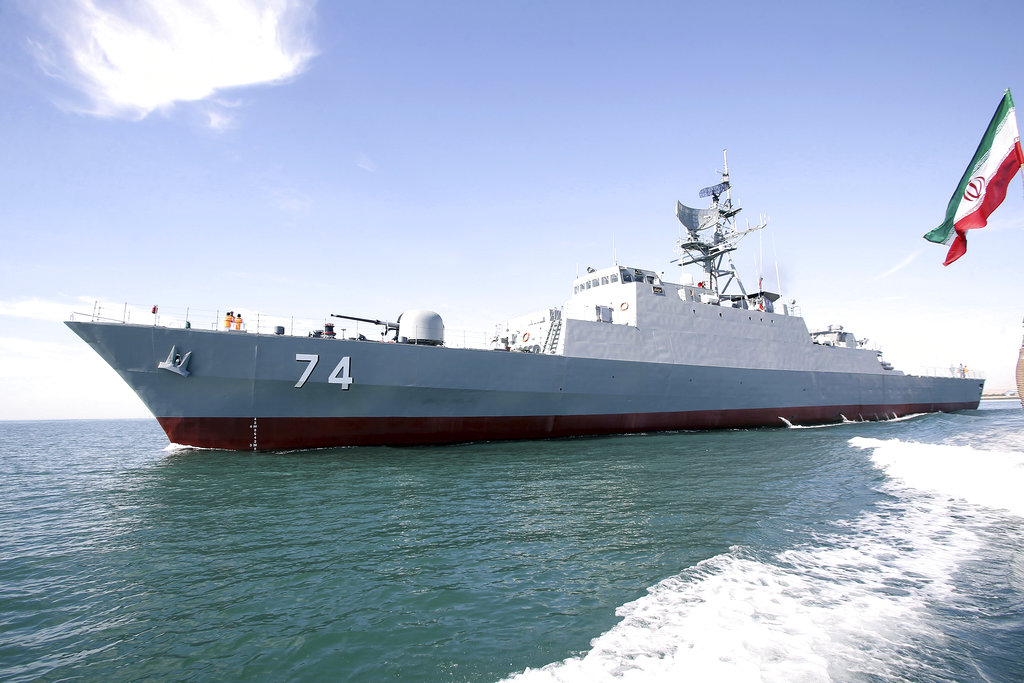
The political advisor to the commander of the Islamic Revolutionary Guard Corps Navy pointed out that the management of the Strait of Hormuz has moved away from traditional methods and become entirely intelligent, stating, “We receive real-time data both underwater, on the surface, and in the airspace above the sea.” Through this monitoring, we can determine which ships are permitted to pass and which are not, regardless of their flag.
Akbarzadeh continued, “We do not want the global economy to be harmed, but the Americans and their allies will not benefit from the war they have ignited. Therefore, they should know that if their food, energy, and trade security has been guaranteed until now through this route, we can now turn that same security into a threat to them.”
He added, “Neighboring countries have been informed that they are our allies, but if their airspace, land, or territorial waters are used against Iran, they will be considered hostile states.”
He noted that these countries have responded positively and have conveyed this concern to the United States and Israel. He emphasized, “In addition to the aforementioned cases, there are other capabilities that will be revealed in due course.”