

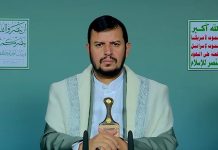



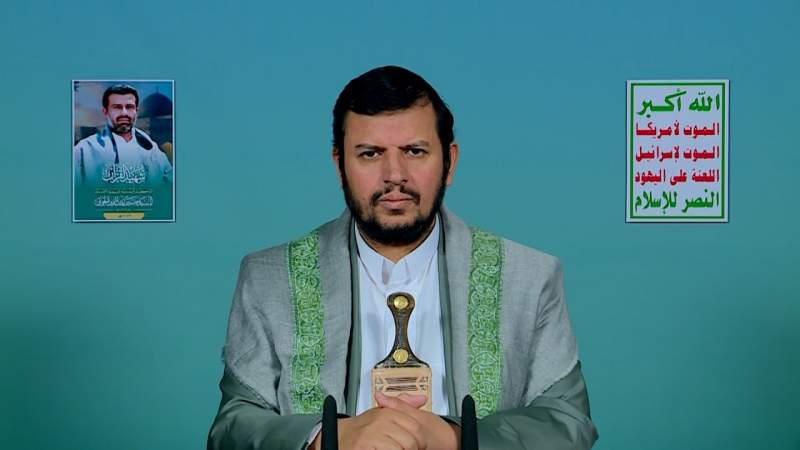
The leader of the revolution, Sayyed Abdul-Malik al-Houthi, explicitly pledged to conduct military strikes against any Israeli military base or permanent presence established in Somalia.
Speaking during an address commemorating Martyrs’ Day, Sayyed Abdul-Malik framed the potential Israeli presence in Somalia as a direct and unacceptable threat to Yemen, the peoples of the region, and the vital waterways of the Red Sea and the Bab el-Mandeb Strait.
“This is a matter we can never remain silent about in the face of such a danger,” the leader declared. “Mere statements of condemnation are of no importance or value whatsoever. Practical stances are necessary.”
Outlining a clear military posture, he stated: “We are continuing with monitoring operations, working to strengthen our monitoring, and are serious about targeting any Israeli deployment in Somalia—a military base or similar permanent Zionist presence—that we find accessible to us. In the manner that we can target it, we will not hesitate in militarily targeting it.”
The leader also accused the Israeli enemy of persistently attempting to achieve its objectives in Somalia by exploiting its strategic geographic location opposite the Gulf of Aden. He characterized a recent visit by Israeli Foreign Minister Gideon Sa’ar to the self-declared republic of Somaliland as a covert “infiltration.”
Sayyed Abdul-Malik detailed that Sa’ar traveled secretly to Ethiopia and then moved to “Somaliland” on a Romanian-registered aircraft, asking why such stealth was necessary for an official visit if not due to fear.
“The Zionist minister was afraid of the Yemeni position,” he concluded, “and there is nothing in the Arab or Islamic position to frighten him.”
In his speech, he accused the United States and the Israeli enemy of orchestrating the recent violent attacks in the Islamic Republic of Iran, framing them as part of a failed foreign plot to destabilize the country.
The leader described the incidents—which included killings and arson—as “American-stamped” criminal acts perpetrated by foreign-backed gangs.
He explained that these groups targeted Iranian civilians, security personnel, and dozens of mosques, employing brutal tactics like “slaughter” and “burning people alive.”
“The American and Israeli enemy each adopts, incites, and claims support for these crimes,” Sayyed Abdul-Malik asserted, drawing a direct link between the violence and longstanding US economic sanctions against Iran.
He added that Washington creates crises through pressure tactics like sanctions and then exploits the resulting hardship to sow internal discord using criminal elements as its spearhead, with the ultimate goal of “controlling Iran.”
However, the leader declared this scheme a failure, crediting the “high vigilance and awareness” of the Iranian people.
He pointed to massive pro-government demonstrations as proof of the populace’s “true identity,” their commitment to the Islamic system, their revolutionary and liberation-oriented path, and their refusal to “submit, succumb, or surrender to America.”
The leader concluded that just as the “criminal gangs” had largely failed and their activities had diminished, America’s broader conspiracies against the region would also fail in the face of steadfast resistance.