












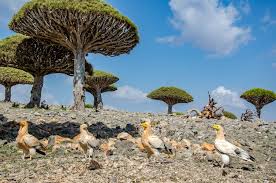
A leading Spanish newspaper has revealed extensive environmental destruction, land degradation, and systematic looting carried out by the Emirati occupation on Yemen’s Socotra Island, targeting the archipelago’s “unique natural treasures.”
In a report published earlier this month, EL PAÍS, based in Madrid, documented the aggressive practices that have caused severe damage to Socotra’s fragile ecosystem. The newspaper said the Emirati occupation deliberately introduced invasive species that disrupted the island’s environmental balance.
Among these was the red palm weevil, an invasive beetle that reportedly reached Socotra through palm seedlings imported by the Khalifa Foundation. According to the report, the introduction of such species reflects a broader Emirati approach aimed at reshaping—and effectively stripping—the island’s distinctive natural environment.
The Spanish daily further reported that the Emirati occupation has engaged in multiple environmental violations, including the theft and sale of coral reefs, which are considered vital to marine stability. It also cited the introduction of at least 126 invasive species, most of which are foreign plants brought in for local agriculture or ornamental purposes.
The report revealed the existence of a “lucrative market” for selling endemic species native to the Socotra archipelago. Citing UNESCO, EL PAÍS noted that butterflies from the island are being sold online for more than $1,200 per specimen, pointing to organized looting operations under the Emirati occupation.
In addition, the newspaper highlighted widespread overfishing, with fish stocks transported by air and sea to the United Arab Emirates, the purchase of vast areas of protected reserves, and the suppression of local voices opposing Emirati environmental violations on the island.
The report concluded that the Emirati occupation has committed numerous destructive environmental abuses throughout its years of control over Socotra.
Previous international reports have similarly warned of looting, land stripping, and environmental vandalism by the Emirati occupier in several occupied areas, particularly regions rich in mineral, oil, and gas resources, describing these practices as part of a broader pattern of systematic and destructive conduct.
Socotra, a UNESCO-listed Yemeni archipelago renowned for its unique ecosystems, has been under Emirati occupation since the start of the Saudi-led aggression on Yemen in 2015.
During this period, international reports and environmental organizations have warned of systematic environmental violations, including the introduction of invasive species, looting of endemic wildlife, overfishing, and the commercialization of protected natural resources.
Critics argue that these practices pose a threat to the island’s ecological balance and compromise its internationally protected status.