



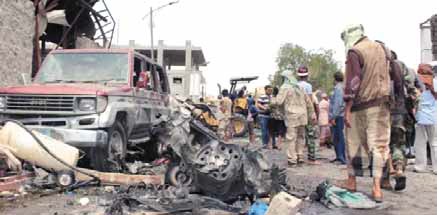
Over the past two days, a military commander “Saleh al-Marfadi”, was killed in a mysterious traffic accident in the Saudi capital Riyadh, according to local and media sources.
The incident has sparked accusations of a systematic “soft liquidation” campaign targeting southern leadership figures.
Al-Marfadi, who served as director of the former chief of staff’s office, was the third southern military official to die under unclear circumstances in Riyadh within just two weeks—all officially attributed to traffic accidents.
According to informed political sources, the repeated nature of these incidents made it difficult to accept coincidence, particularly as these commanders had been summoned to Riyadh under the pretext of the “South–South dialogue.”
The pattern began in late January with the death of Abdullah Saleh Al-Jaid, commander of the 31 Giants Brigade, in a Riyadh traffic accident. This was followed by the reported death of Major General Abdul-Sergeant Thabet al-Subaihi from sudden cardiac arrest, and the narrow survival of another southern leader, Ali Ahmed al-Jabwani, from an unexplained health emergency.
Social media platforms have been rife with allegations accusing Saudi authorities of orchestrating a covert campaign to eliminate southern military leaders. Many users link these events to heightened tensions following Saudi airstrikes in Hadramout last December, which killed approximately 600 soldiers affiliated with southern transitional forces.
Critics argue that what appear to be traffic accidents or sudden health failures are, in fact, deliberate acts—silent and politically convenient methods to remove obstacles to Saudi ambitions in southern Yemen. Activists have drawn parallels between these incidents and the 2018 killing of Saudi journalist Jamal Khashoggi, questioning why southern military figures are consistently meeting fatal ends in Riyadh, and why now.
They ask why these so-called accidents occur specifically in the heart of the Saudi capital, and why they are concentrated during this period—implying a deliberate strategy rather than mere misfortune.
In the same context, a Saudi political analyst has said that that UAE-backed Southern Transitional Council (STC) forces continue to maintain firm control over the city of Aden, despite narratives suggesting their presence has diminished.
Khalid Al-Subaie, head of the Center for Studies and Consultations, said in a post on the social media platform X that reports indicate that the STC forces remain fully deployed with their personnel and weapons across Aden and its surrounding areas.
He cautioned that relying on economic projects and salary payments — including those directed to members of these forces — could turn the situation into what he described as “time bombs” capable of exploding in the face of Aden’s residents and other provinces.
Al-Subaie also called on Falah Al-Shahrani, an adviser to the Saudi-led joint forces, to take steps to “contain and remove” the STC forces from Aden before implementing any development projects. His remarks were seen as an acknowledgment of the limitations of the current containment strategy and an indication of ongoing tensions between different factions and their local allies involved in the conflict.
In parallel, identical political and media sources have revealed that Saudi authorities thwarted an attempt by “Tariq Saleh” to leave the capital, Riyadh, for the city of Mocha, amid escalating tensions among factions in western Taiz governorate.
Despite Saleh’s repeated efforts to justify his departure—citing the need to inaugurate the “new training year” for his troops and to stabilize internal unrest caused by funding shortages—Saudi authorities remained firm in their refusal. Instead, they permitted him only a “video conference” with his field commanders.
During the call, Saleh reassured his factions regarding the salary crisis, stating that Saudi Arabia has committed to covering the payrolls previously funded by the UAE through the end of 2025.
These developments follow Saudi Arabia’s decisive move to terminate the UAE’s mission within the Saudi-led Coalition last December. This shift was triggered by the expansion of UAE-backed Southern Transitional Council (STC) factions into the Hadramout and Mahra governorates, eastern Yemen, where they seized camps in the First Military Region and advanced toward the Al-Abr border area.
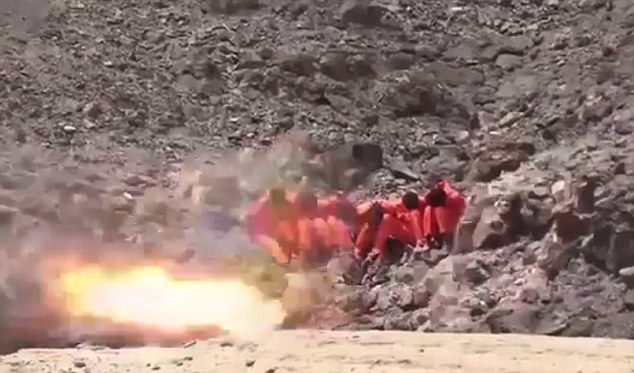
The Saudi response to these maneuvers has been marked by significant military and political pressure, which included Saudi airstrikes targeted pro-UAE factions following their refusal to withdraw from Hadramout and Mahra, resulting in approximately 600 dead or missing.
Further strikes targeted the birthplace of the head of the dissolved STC, “Aidarus al-Zoubaidi,” in Dhalea governorate after his refusal to report to Riyadh. Consequently, Al-Zoubaidi fled Aden by sea on January 7, eventually reaching Somalia before being airlifted to Abu Dhabi.
On the public front, An angry popular protest was held on Monday in the city of Ras al-Ara in the province of Lahj, south of Yemen, as demonstrators poured through the main streets to the seaport to demand the restoration of their looted rights.
In the rally, the protesters raised slogans condemning the organized deprivation suffered by the sons of Mudaraba and Ras al-Ara, despite the huge revenues generated by the port, which are spent in the interests of corrupt local and military leaders loyal to Saudi Arabia, which has controlled the district for years.
The demonstrators stressed the need to direct part of the port’s revenues to revive the deteriorating basic services, prioritizing roads, electricity, education and health, pointing out that there are enormous financial returns without any development investment in the region.
The protesters directly accused what they called “corrupt and influential entities” within the local and military leadership loyal to the Saudi-led coalition, and followers of Salafi leader Hamdi Shoukry al-Subaihi, a leader of the Saudi-backed Al-Amaiqa factions.
They also accused local and military leaders of seizing customs and duty revenues to transfer them to personal accounts, while poor families and the fishing community suffer from a lack of basic necessities of life.
The rally demanded the establishment of an independent charitable fund for the people of the region, allocating a fixed percentage of the port’s revenues to support needy groups, and stopping discrimination in the distribution of resources, as well as supporting for urgent service and development projects.
It warned of an open escalation in the coming weeks if their demands were not met, including the immobilization of the port until social justice was achieved.
Meanwhile, unidentified gunmen launched an attack on the residence of the Secretary-General of the Al-Rawdah District Local Council in Shabwa governorate, Ahmed Mohammed Ja’ool,, highlighting the severe security vacuum in the governorate.
According to local sources, the attackers targeted the house with a hand grenade that exploded in the courtyard, causing significant material damage to the building’s facade and shattering windows. No casualties were reported among the official’s family members.
The incident occurred just two days after Ja’ool participated in a meeting with the “Karama Movement” for the Wahidi tribes, who are demanding independent administrative rights.
Witnesses noted that the perpetrators fled to an unknown destination, exploiting the ongoing chaos and the spread of extremist elements in the area. The attack has sparked widespread fear among residents and renewed criticism of local authorities for their failure to maintain order.