




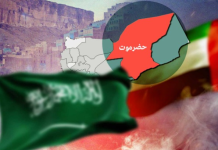





What is happening in Hadhramaut province is no longer merely a struggle for influence among local proxies, nor a passing dispute between yesterday’s partners within the coalition of aggression. Rather, it has entered a more dangerous and complex phase, whose hallmark is the militarization of ports, striking supply lines, and imposing faits accomplis through direct military force.
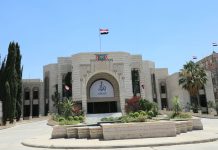
The attack on the port of Mukalla under the pretext of “striking external military support” clearly reveals a new scenario being managed from regional and international operations rooms, where Saudi, Emirati, and American interests intersect — along with those of the Zionist enemy — at the expense of Yemeni sovereignty and the security of the Arabian Sea and the Gulf of Aden.
Mukalla Port: From Economic Lifeline to Military Target
The Saudi-led coalition had announced of evacuation of the port of Mukalla, then closing it, and ultimately carrying out a “limited” military strike, signals a clear shift in the course of the conflict .
The port was not targeted solely as a civilian facility, but was instead treated as a strategic logistical hub within a broader regional confrontation.
According to sources, Yemeni ports are increasingly being used as rear bases to supply armed groups and manage rivalries between Riyadh and Abu Dhabi.
The coalition said the strike was carried out after reports that vessels carrying weapons had arrived at the port and it came from Fujairah — a development viewed by analysts as signaling a shift from proxy dynamics to direct friction among coalition partners.
Riyadh–Abu Dhabi Clash: Coalition Collapse from Within
Rapid developments in Hadhramaut and Al-Mahra indicate that the Saudi-Emirati conflict has gone beyond the stage of political containment and entered the realm of mutual military pressure and threats. Saudi threats to strike “Southern Transitional Council” factions are matched by an Emirati insistence on continuing recruitment, bringing in drones, and imposing a new reality by force in eastern Yemen.
This confrontation does not reflect a transient tactical disagreement, but rather an open strategic struggle over:
— Oil and Gas Resources
— Ports and Sea lanes
— Geopolitical Influence Stretching from Hadhramaut to the Horn of Africa
Local Tools… Regional Masters
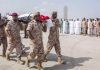
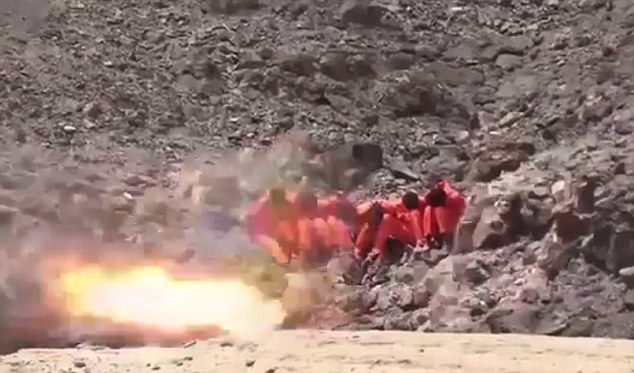
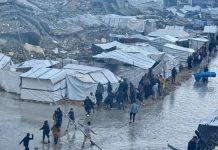
What is unfolding on the ground exposes a reality long concealed: the armed factions, whether aligned with Riyadh or Abu Dhabi, are nothing more than instruments executing external projects, moved or sacrificed according to the balance of regional interests. Leaving bodies exposed for days and delaying the removal of the dead is not merely a passing humanitarian detail, but a blatant indication of the fragility of these formations, the absence of national decision-making, and the collapse of values before orders coming from abroad.
The Most Dangerous Dimension: American and Israeli Presence
Reports of Israeli officers at Mukalla Airport and coordination of the battle through command centers coincide with:
— The Israeli recognition of “Somaliland”
— Increased Emirati activity in Berbera
— The rapid militarization of coasts from Hadhramaut to the Horn of Africa
These developments confirm that Hadhramaut is no longer merely a local conflict zone, but a key strategic link in a broader effort to encircle the Red Sea and Arabian Sea and secure the interests of the Israeli state through regional proxies.
Hadhramaut at the Heart of the Battle
Despite attempts to depict Hadhramaut as “stable,” the reality on the ground shows the province at the center of the struggle:
— Competition over natural resources
— Strategic control of territory
— Authority and decision-making power
The refusal of local tribal groups to accept forceful impositions reflects a growing awareness of the risks of turning Hadhramaut into a playground for regional power struggles.
When Aggression Turns Inward
The events at Mukalla port are not isolated; they signal that the coalition of aggression has entered a phase of internal predation, no longer distinguishing between partners, rivals, or proxies. When ports become military targets, bodies serve as political messages, and sovereignty becomes a bargaining chip, the inevitable outcome is the coalition’s disintegration, exposure of its colonial ambitions, and its approach toward natural collapse.
Today, Hadhramaut is not a peripheral battleground but a mirror reflecting the full reality of the aggression without disguise.