
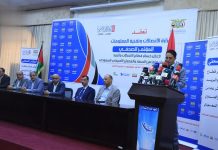
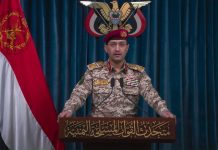




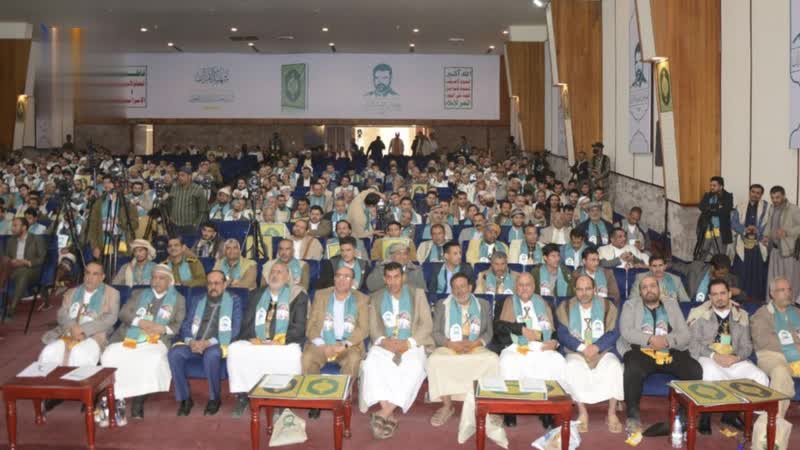
The Zaid Ali Mosleh Foundation launched the Martyr of the Quran festival on Monday, coinciding with the annual commemoration of the late leader Hussein Badreddin al-Houthi’s martyrdom
The three-day event features seminars, cultural activities, and discussions highlighting al-Houthi’s Quranic project, which organizers say sought to inspire the Islamic nation, challenge oppressors, and support marginalized groups through teachings from the Quran.
During the opening of the festival, Ahmed Hamid, director of the Presidential Office, described Sayyed Hussain al-Houthi as a visionary leader who emerged during a critical period in the Islamic world, seeking to rescue the [Islamic] nation from humiliation and injustice.
Hamid cited the September 11 attacks and the subsequent U.S.-led invasions of Afghanistan and Iraq, which he described as part of a Western campaign to dominate Muslim nations. He said millions of Muslims were killed, and Arab and Islamic societies remained largely silent during this period.
He portrayed al-Houthi as a figure who broke that silence, offering practical solutions inspired by the Quran and establishing what he called a “Quranic nation” based on the knowledge of God. “He built a strong Quranic community that overcame tyrants and resisted oppressors, proving that the Quranic project offers a path to restoring our nation’s dignity and unity,” Hamid said.
Hamid described the Quranic project as inclusive, free from sectarian, geographic, or political constraints, aiming to raise awareness of the Islamic world’s responsibilities and expose the schemes and deceptions of its adversaries.
The festival featured poetry readings by Mo’ath al-Junaid and Zaid al-Naami, musical performances from the Ansarullah and Al-Risala groups, and visual tributes honoring al-Houthi and his successor, Sayyed Abdul-Malik Badreddin al-Houthi