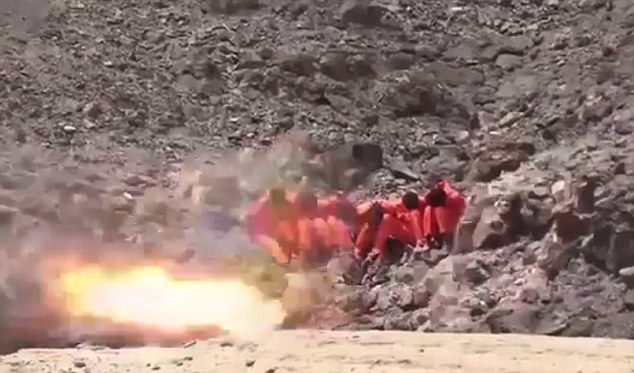






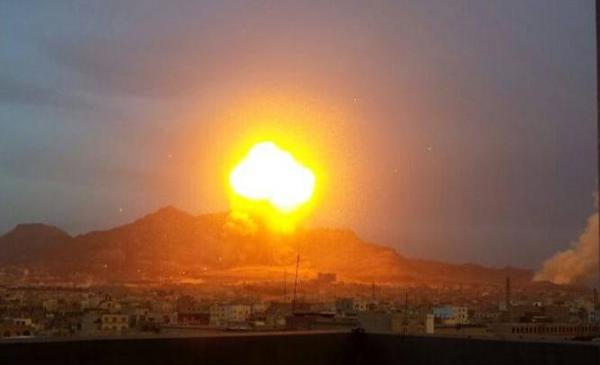
On 11 May 2015, the US‑Saudi aggression carried out one of the deadliest attacks on civilians during Yemen’s long war. The bombing of Mount Nqm and the adjacent residential neighbourhoods in the capital Sana’a used internationally prohibited weapons, including highly destructive vacuum and concussion bombs. Eleven years later, the event remains etched in Yemeni memory as a symbol of the war’s brutality.
Witnesses and officials report that the late‑afternoon attack turned Sana’a into a scene of massive explosions and flames. Shrapnel and blast waves swept through densely populated districts, killing dozens and wounding hundreds, many of them women and children. Survivors describe unprecedented panic as fire and rubble spread over a wide area of the capital.
Long‑Term Impact and Legal Accusations
The effects of the massacre were not limited to the immediate bloodshed. Long‑term injuries, disabilities and deep psychological trauma have affected thousands of Yemeni families. Human rights activists say the Nqm bombing stands as compelling evidence of the scale of violations inflicted on Yemen and of the type of weaponry used against civilian zones.
Speaking to Almasirah TV, Ali al‑Dailami – a member of Ansarullah’s Political Bureau and former Minister of Human Rights – stated that the crimes committed by the Saudi regime, “with clear American support and backing”, represent a striking example of the failure of international law and UN bodies to protect civilians.
According to al‑Dailami, what happened in Yemen goes beyond a single legal category and amounts to “compounded crimes” that include war crimes, crimes against humanity and genocide.
Civilian Toll and Official Figures
Al‑Dailami noted that official statistics recorded more than 100 martyrs and over 300 wounded from the Nqm attack alone. He affirmed that the real number is significantly higher because the bombardment struck densely populated residential zones.
He stressed that targeting civilian objects and populated areas with vacuum and concussion bombs should have triggered immediate action by the International Criminal Court under the Geneva Conventions and international humanitarian law.
He also accused the United Nations of bowing to US and Saudi pressure. As an example, he cited the decision to remove Saudi Arabia from the UN blacklist for child killings, which in his view reveals the “size of obstruction and bias” inside international institutions in favour of the “arrogant and criminal powers”.
“Crimes Do Not Expire”
Al‑Dailami added that statements by former coalition spokesmen – Ahmed al‑Asiri and Turki al‑Malki – represent “documented confessions” of crimes against Yemenis. He insisted that “these crimes are not subject to a statute of limitations” and that the Yemeni people will not renounce their right to prosecute those responsible.
He also accused certain external parties, backed by Saudi Arabia, the UAE and with British support, of “working to demonise the victims and manipulate the case”.
A Broader Pattern of Destruction
Fahmi al‑Yusufi, a journalist, researcher and former Deputy Minister of Information, described the Nqm massacre as a crime in which “prohibited weapons” were used against civilians. He argued that the Saudi‑led aggression was “illegal and illegitimate from the start”, lacking any legal justification to wage war on Yemen or impose guardianship by force.
Al‑Yusufi pointed out that the use of vacuum and concussion bombs against Mount Nqm and its surroundings was documented by local, Arab and foreign media as well as by international organisations. However, he accused those organisations of bias, which he attributed to “Saudi bribes” and financial‑political pressure.
He recalled that former UN Secretary‑General Ban Ki‑moon acknowledged the pressure applied to remove Saudi Arabia from the blacklist for child killings. Al‑Yusufi also alleged that most of the humanitarian aid money Saudi Arabia announced through the UN went to “UN brokers” and international staff, while genuine aid did not reach the Yemeni people.
Right to Self‑Defence and Future Demands
Al‑Yusufi stressed that the suffering inflicted on Yemenis gives them “the full right to defend themselves and their sovereignty”. He views the confrontation with the aggression as a “sacred cause” linked to the defence of land, people and national wealth.
He urged that Yemen’s negotiating demands be raised, including the recovery of territories and resources looted over past decades, and held the United States, Britain and NATO countries responsible for planning, arming and supporting the coalition politically and militarily.
Source: Almasirah English Website