









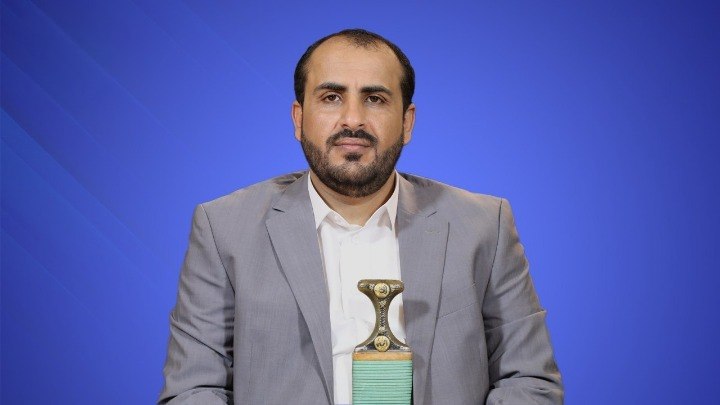
Mohammed Abdulsalam, head of Yemen’s National Negotiating Delegation, has welcomed Al-Azhar Grand Imam Ahmed al-Tayeb’s call to end wars and conflicts across the region, stressing that the Saudi war on Yemen began in 2015 without justification.
In a message addressed to al-Tayeb on Wednesday, Abdulsalam said the conflict between Yemen and Saudi Arabia was currently among the region’s most prominent and heated confrontations. He called for the facts surrounding the Saudi military intervention against the Yemeni people since 2015 to be presented to the public.
Abdulsalam said the Yemeni people had never posed a threat to Saudi Arabia and had not initiated the war. He noted that Yemen’s disputes before March 2015 were internal and could have been resolved through dialogue and mutual understanding without foreign military intervention.
He recalled that in early 2015, he had been assigned by the Leader of the Revolution, Sayyed Abdul-Malik al-Houthi, to travel to Saudi Arabia carrying a message intended to reassure the Saudi leadership. The message, he said, sought to explain Yemen’s internal situation, affirm that the Yemeni revolution was not directed against the Kingdom, and express readiness to resolve political differences through dialogue.
According to Abdulsalam, the message was delivered during the reign of the late Saudi King Abdullah bin Abdulaziz.
He returned to Yemen following the king’s death, hoping contacts could resume later. However, developments subsequently moved toward military escalation after King Salman assumed power.
Abdulsalam said the Saudi military campaign began on March 26, 2015, under the name “Operation Decisive Storm,” with airstrikes targeting Sana’a International Airport and a nearby residential neighborhood. He argued that the intervention lacked justification and widened Yemen’s internal crisis instead of containing it through political means.
He said the principles of Islam, Arab solidarity and good-neighborly relations required Arab states, particularly Saudi Arabia, to help resolve disputes among Yemenis peacefully rather than taking sides. Dialogue, he stressed, remained the appropriate way to address disagreements without resorting to war or imposing outcomes by force.
Citing a Quranic verse urging reconciliation between fighting groups of believers, Abdulsalam said the Quranic approach was based on reconciliation, justice and fairness. He argued that addressing the causes of disputes and ensuring that no party felt wronged were essential to preventing renewed conflict.
Abdulsalam further accused Saudi Arabia of continuing its military intervention through massacres, crimes and a severe blockade. He said the war had killed tens of thousands of civilians, while many others had died from the consequences of the blockade and deprivation of essential supplies.
He maintained that the Saudi military campaign had failed to achieve its objectives, while its humanitarian and political consequences continued. Saudi Arabia, he said, had been unable to secure a military victory or escape the repercussions of its intervention, which he argued had deepened the suffering of the Yemeni people.
Abdulsalam reiterated his welcome for al-Tayeb’s call to end regional wars, expressing hope that peace efforts would help halt conflicts, ease the suffering of affected populations, and promote dialogue and mutual understanding based on justice and dignity.