





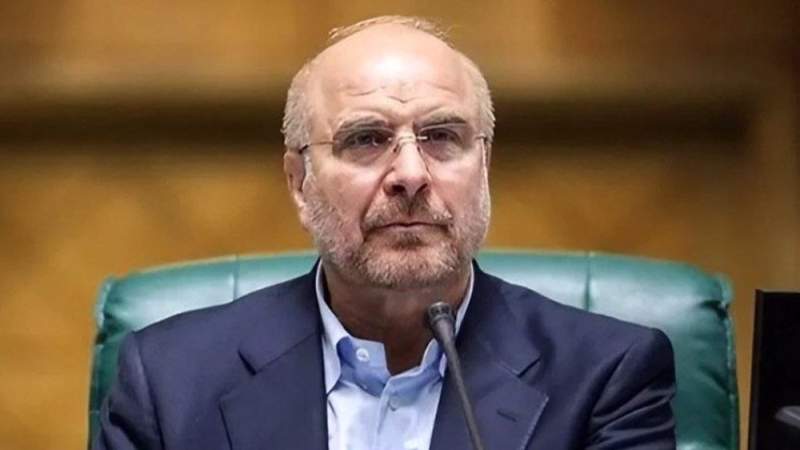
Iran’s Majlis (Parliament) speaker has categorically refuted successive false claims made by US President Donald Trump regarding the Strait of Hormuz and the rules set by the Islamic Republic regarding transit through the strategic waterway.
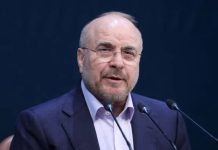
In a post on X on Friday, Mohammad-Baqer Qalibaf wrote, “The US president made seven claims in the span of one hour, all seven of which are false.”
Earlier, Trump had taken to his Truth Social platform, alleging that Iran had “agreed to never close the Strait of Hormuz again.” He had also claimed that the United States’ “naval blockade will remain in full force and effect as it pertains to Iran, only, until such time as our transaction with Iran is 100% complete.” Trump had additionally said that ceasefire negotiations “should go very quickly in that most of the points are already negotiated.”
Qalibaf, however, asserted that “if the blockade continues, the Strait of Hormuz will not remain open.”
He also underlined, “Passage through the Strait of Hormuz will take place based on a ‘designated route’ and with ‘Iran’s authorization.'”
“Whether the strait remains open or closed, and the rules governing it, will be determined on the battlefield, not on social media.”
Iran shut down the strait to adversaries and their allies following the onset of the United States’ and the Israeli regime’s latest bout of unprovoked aggression targeting the Islamic Republic on February 8.
On April 7, Trump announced a two-week lull in attacks after the closure sent shockwaves throughout the global energy markets, with the US president experiencing momentous further drop in his popularity as a result of spiking gasoline prices.
The announcement also followed at least 99 waves of decisive and successful Iranian retaliatory strikes against sensitive and strategic American and Israeli targets throughout the region.
Qalibaf underscored how recourse to “lies” did not prompt the US to win throughout the aggression, referring to the back-to-back claims that were being made by Washington during the attacks about its self-described affliction of irreversible damage to Iran’s defensive and retaliatory infrastructure.
The Iranian official went on by stressing that, while such a campaign of fabrication did not benefit Washington during the aggression, it would “certainly” not be of any use to it during negotiations either.
“Media warfare and the engineering of public opinion are a major part of war, but the Iranian nation will not be swayed by such tactics. For accurate and reliable information on the negotiations, refer to the recent interview with the Foreign Ministry spokesperson.”
Also on Friday, Foreign Ministry spokesperson, Esmaeil Baghaei underlined Iran’s insistence on a 10-point proposal it forwarded prior to Trump’s April 7 announcement.
He enumerated such provisions as realization of a conclusive end to whatever instance of aggression against the Islamic Republic, lifting of sanctions, and receipt of compensation as indivisible parts of the country’s demands.
Source: Press TV