










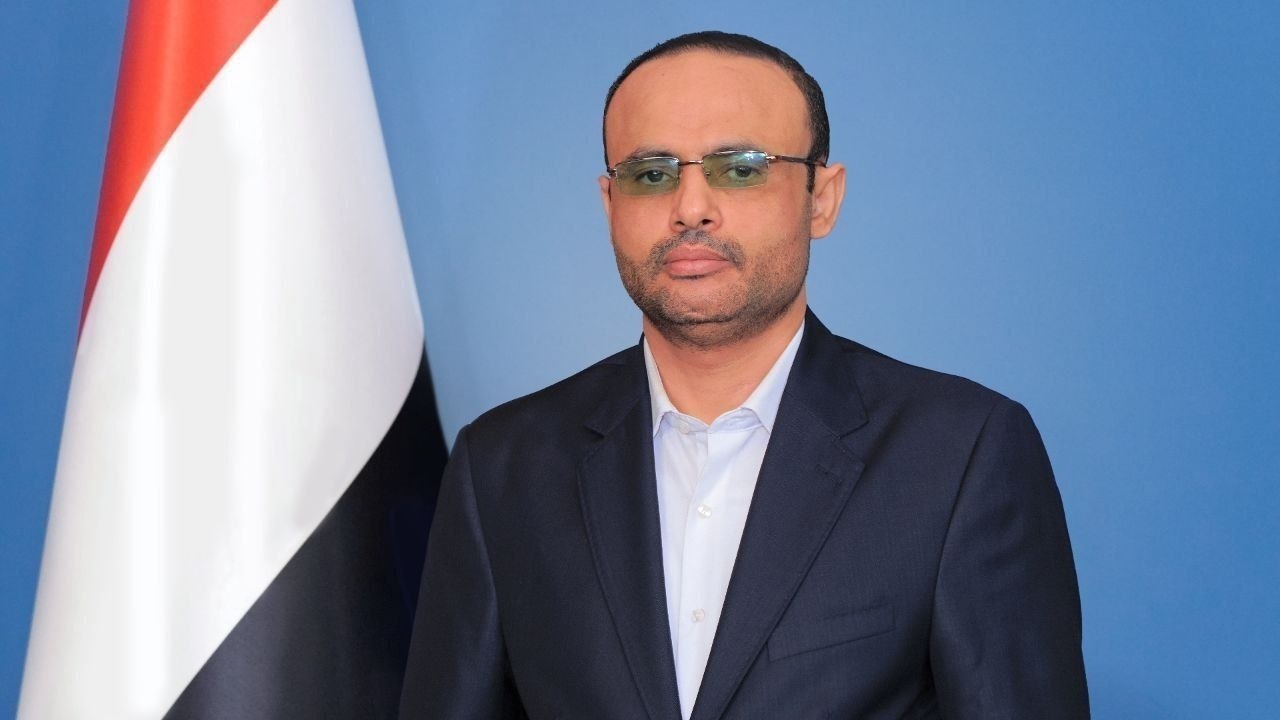
Yemen’s President Mahdi al-Mashat, congratulated the Leader of the Revolution and the Yemeni people on the 36th anniversary of Yemeni unity, stressing that the occasion should serve to revive the values of brotherhood, love, and rejection of hatred.
Speaking on the anniversary, al-Mashat said Yemenis had realized that the strength of nations lies in cohesion and solidarity, while division represents a path toward weakness and humiliation. He added that the current stage requires ending internal conflicts in order to confront what he described as common external threats.
At the same time, he said adherence to Yemeni unity should not overlook what he described as the “dark period” that followed the 1994 summer war, accusing the former regime of transforming unity from a national partnership into a tool for plunder, exclusion, and injustice.
Al-Mashat stated that the former regime had caused deep damage to Yemen and its unity, warning against attempts by what he described as the former regime’s “gang” to return under the cover of aggression and foreign-backed forces. He stressed that Yemen and its unity project are greater than to be reduced to individuals who “built their palaces on its ruins.”
He further emphasized that protecting unity is not merely a political issue, but an inseparable part of the national struggle and a practical response to projects aimed at partition. He called for addressing national issues, including the southern issue, through what he described as an independent and principled national approach free from partisan pressure.
Al-Mashat also warned coalition-backed forces and affiliated militias against attempts to undermine unity, accusing the American-Saudi coalition of seeking to divide Yemen, plunder its resources, and impose federal divisions rejected by the September 21 Revolution.
On regional developments, al-Mashat said the Israeli and American sides no longer conceal what he described as their broader regional ambitions under the banner of “Greater Israel.” He added that the Yemeni people had confronted those plans since the launch of the “Al-Aqsa Flood” operation by supporting the armed forces backing Palestinians in Gaza.
He also renewed support for Iran, affirming what he described as Tehran’s right to defend itself. He said the American-Israeli confrontation with Iran requires regional governments and peoples to unite against external schemes rather than align with them, adding that Iran and other “fronts of resistance” reveal the strengths of the nation and the weaknesses of its enemies.
In addition, al-Mashat called on Arab and Islamic countries to unite ranks, end internal conflicts, and refrain from allowing their territories or airspace to be used in actions targeting regional populations.
He also welcomed progress in the prisoners’ file and affirmed readiness for a comprehensive prisoner exchange agreement.
Concluding his remarks, al-Mashat reiterated support for the Palestinian and Lebanese causes, condemned normalization efforts with Israeli enemy — including moves by the “Somaliland” region toward ties with the Zionist entity — and denounced the burning of the Holy Quran.
He called for political and economic boycotts of countries that permit such acts and warned Israel against continuing military actions against Palestinians and Lebanese