








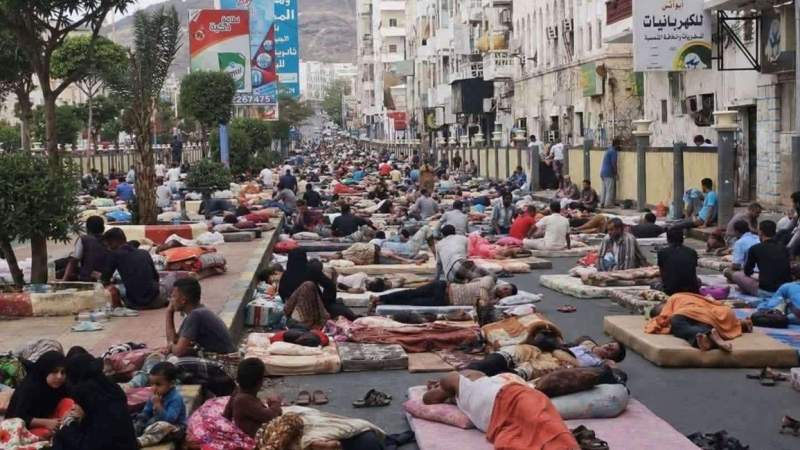
As evening falls in occupied Aden, many residents are forced to sleep on sidewalks and open streets due to the scorching summer heat and continuous power outages.
Temperatures in the city have risen to record levels, with homes turning into suffocating spaces for countless families amid prolonged electricity cuts. Scenes of citizens bedding down in the streets of Mualla, Crater, and Tawahi have become common, illustrating the worsening daily suffering residents have endured for weeks.
In response to the ongoing blackouts and deteriorating services, dozens of protesters blocked the road leading to the Maashiq Palace in Aden on Monday evening. The demonstration included cutting off the road and setting fire to discarded tires, expressing outrage over unprecedented hours of power cuts coinciding with an intense heatwave.
Protesters chanted slogans demanding the mercenary government and relevant authorities intervene urgently to find radical solutions to the electricity crisis and end the population’s suffering, amid what they described as the collapse of basic services and deteriorating living conditions.
‘Life Has Become Hell’
Protesters said their lives have become “akin to hell” due to continuous power outages during unprecedented heatwaves, expressing astonishment at the government’s continued silence and inability to address citizens’ priorities, foremost among them electricity.
Economic experts believe the suffering of Aden’s residents has reached unprecedented levels, given the widespread paralysis affecting various aspects of daily life. They stressed that the ongoing electricity crisis exacerbates the humanitarian and livelihood burdens and increases popular resentment in the city and neighboring provinces.
Protests Spread to Other Provinces
Popular anger extended to other cities in southern and eastern Yemen, with escalating protests Monday evening in Aden and Mukalla for the second consecutive day. In Hadramout province, dozens of citizens took to the streets in Mukalla, blocking several main roads and setting fire to tires, disrupting traffic.
In occupied Lahj province, citizens continued their peaceful protest movements demanding improved electricity service and addressing the deteriorating living conditions, affirming that their demands fall within the legitimate service rights of citizens. One protest saw limited tension between demonstrators and security forces after a main road was blocked, before local mediators contained the situation without any reported injuries.
Protesters renewed their commitment to continuing peaceful escalation until relevant authorities respond to residents’ demands, foremost among them improving electricity service and addressing worsening service and living crises. They called on authorities to deal responsibly with popular demands, which they described as basic citizens’ rights.
Security Response and Government Promises
In an attempt to contain the growing discontent, the Aden Security Administration, affiliated with the mercenary government, issued a statement Tuesday commenting on the protests. The statement expressed understanding of the citizens’ discontent and suffering under current circumstances.
The security administration expressed regret over the injury of one protester during events near the Al-Safina roundabout, confirming that relevant authorities are following up on the incident according to legal procedures, emphasizing that protecting lives and maintaining public security are a fundamental priority.
Meanwhile, the Ministry of Electricity and Energy in the mercenary government announced Tuesday the start of an emergency plan to improve power generation efficiency in Aden and Hadramout, including providing additional fuel quantities with Saudi support.
A Long-Standing Crisis
However, the crisis affecting provinces under the control of the mercenary government—loyal to the Saudi occupation—has persisted for months and has worsened further with the arrival of summer and rising temperatures.
The lack of fuel needed to operate power generation plants and the authorities’ declining ability to find sustainable solutions have driven popular protests to expand and raise the ceiling of demands related to reforming the service sector and improving living conditions.
Source: Almasirah English Website